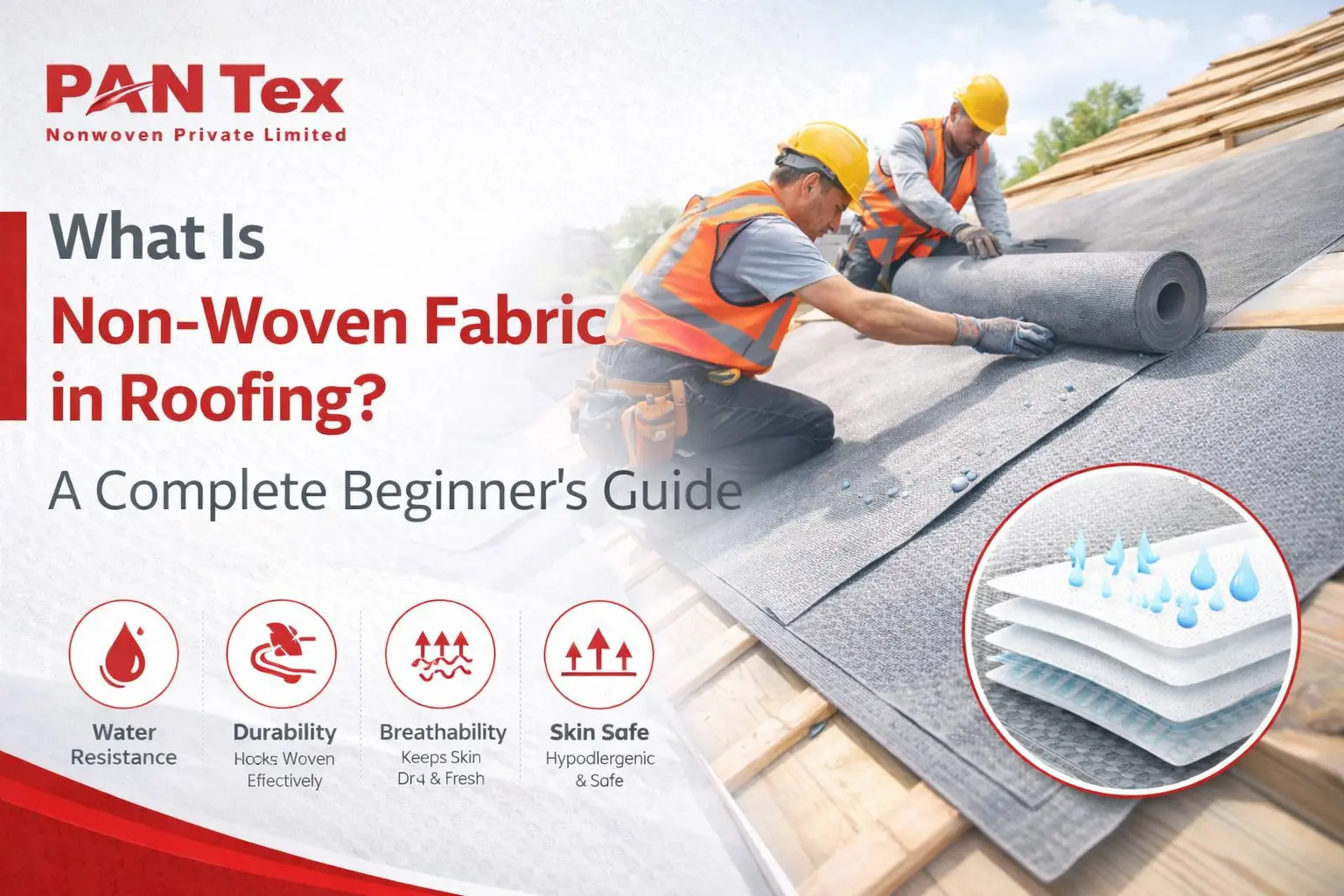
Non-woven fabric roofing refers to a specialized layer of engineered fabric installed beneath or within a roofing system to strengthen, protect, and extend the life of the structure above it. Unlike traditional woven materials, this fabric is manufactured by bonding fibers together through heat, chemicals, or mechanical pressure, rather than by weaving threads over and under each other. If you have ever heard a contractor mention underlayment, geotextile membrane, or roofing felt, you have already encountered a version of this material without knowing it.
This guide explains everything a first-time buyer or building professional needs to know about nonwoven roofing material, how it works, why it matters, and how to choose the right type for any project.
What You’ll Learn
- What nonwoven fabric actually is and how it is made
- Why is it used in roofing systems specifically
- The main roofing fabric types available today
- Key benefits that make nonwoven fabric a smart choice
- How PAN Tex Non-Woven fits into modern roofing applications
- What to look for before making a purchase decision
What Is Nonwoven Fabric? A Simple Definition
Before understanding its role in roofing, it helps to answer the basic question: What is nonwoven fabric?
Nonwoven fabric is a flat, flexible sheet material made directly from fibers or filaments. Instead of being woven or knitted, the fibers are bonded together in a web structure using one of three methods: thermal bonding (heat), chemical bonding (adhesives or resins), or mechanical bonding (needle punching or hydroentanglement). As a result, the final material is strong, consistent, and highly adaptable to different industrial uses.
In everyday life, nonwoven fabrics appear in disposable masks, medical gowns, hygiene products, and filtration systems. However, in construction and roofing specifically, nonwoven fabric serves a far more demanding role. It must resist water, UV radiation, tearing, and compression, often for decades at a time.
💡 Tip: Not all nonwoven fabrics perform the same way. Always check whether a product is rated for roofing applications before purchasing, as general-purpose nonwoven materials may not meet construction standards.
How Non-Woven Fabric Roofing Works
Non-woven fabric roofing works as a protective and functional layer within the roofing assembly. In most applications, it sits between the structural deck and the outer roofing surface, whether that surface is asphalt shingles, metal panels, tiles, or a waterproof membrane.
Specifically, nonwoven fabric in roofing performs three core functions:
1. Water and moisture barrier
Nonwoven underlayment resists water penetration from rain, snow, and condensation. Furthermore, it allows water vapor that builds up inside the building to escape outward, which prevents moisture from becoming trapped inside the roof structure and causing rot or mold.
2. Thermal and UV protection
Many nonwoven roofing materials are engineered with UV-stabilized fibers. This means the fabric does not degrade quickly when exposed to sunlight during installation or in areas where the outer roofing layer is thin. Additionally, some products provide a basic level of thermal insulation by reducing heat transfer between the deck and the outer surface.
3. Structural reinforcement
Nonwoven construction fabric adds tensile strength to the roofing system. In particular, it helps distribute the load of foot traffic during installation and prevents the outer membrane or shingles from cracking under localized stress. This is especially important on flat or low-slope roofs where pooling water adds constant downward pressure.
Main Roofing Fabric Types You Should Know
Understanding the different roofing fabric types helps you choose the right material for your specific project. Each type is manufactured differently and performs best in specific conditions.
Spunbond nonwoven fabric
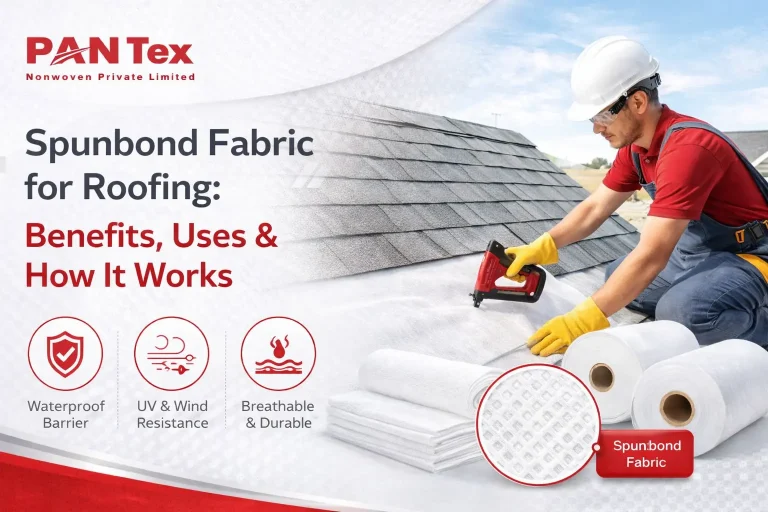
Spunbond is the most widely used nonwoven roofing material in modern construction. It is produced by spinning continuous filaments of polypropylene or polyester and bonding them together thermally. The result is a lightweight, tear-resistant sheet that handles moisture well and installs quickly. Moreover, spunbond fabric is cost-effective and available in a wide range of weights, making it suitable for both residential and commercial roofing.
Meltblown nonwoven fabric
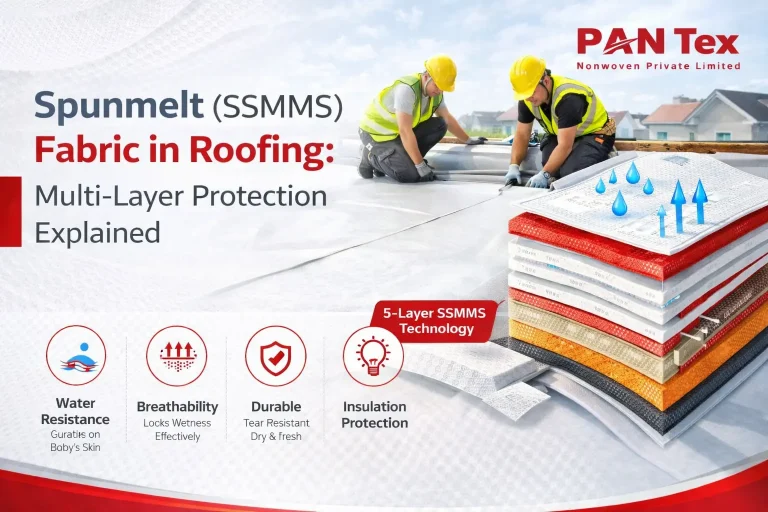
Meltblown fabric is produced using high-velocity air to blow molten polymer into ultra-fine fibers. As a result, the material has an extremely fine pore structure that is highly effective at filtering water and resisting wind-driven rain. In roofing, meltblown layers are often combined with spunbond layers to create a composite material known as SMS (spunbond-meltblown-spunbond), which offers superior filtration and strength together.
Why Nonwoven Construction Fabric Is Preferred Over Woven Alternatives
Many contractors and roofing engineers prefer nonwoven construction fabric over woven geotextiles and traditional roofing felts for several practical reasons.
Consistency: Because fibers are distributed randomly and bonded uniformly, nonwoven fabric has consistent strength in all directions. In contrast, woven fabric is stronger along the thread lines and weaker where threads cross, which creates potential weak points under stress.
Weight advantage: Nonwoven fabric achieves similar or superior strength at a lower weight than woven alternatives. This makes it easier to handle on rooftops, reduces shipping costs, and lowers the overall load on the roof structure.
Breathability: Unlike plastic sheeting or foil barriers, most nonwoven roofing materials are breathable. They allow water vapor to pass through while blocking liquid water, which is exactly what a healthy roofing system needs to prevent condensation buildup.
Faster installation: Because nonwoven fabric comes in wide rolls and does not fray at cut edges, it installs significantly faster than woven alternatives. As a result, labor costs on roofing projects are reduced without sacrificing material performance.
Where PAN Tex Non-Woven Fits Into Modern Roofing
When selecting a nonwoven roofing material for a construction project, the quality and consistency of the manufacturer matter as much as the product specification itself. PAN Tex Non Woven is a trusted name in the nonwoven fabric industry, producing high-performance materials engineered specifically for demanding construction and roofing applications.
PAN Tex Non Woven manufactures spunbond and Meltblown Non Woven fabrics that meet the strength, permeability, and durability requirements of modern roofing systems. In particular, their products are designed to perform across a wide range of climatic conditions, from high-humidity coastal environments to dry and UV-intense inland regions.
One of the reasons contractors and roofing professionals choose PAN Tex Non Woven is the consistency of their material properties across production batches. In roofing, inconsistency in fabric weight, tensile strength, or pore structure can lead to weak points in the finished roof. Because PAN Tex Non Woven maintains tight production tolerances, specifiers can rely on the same performance from roll to roll across an entire project.
Furthermore, PAN Tex Non Woven products are available in a wide range of weights and widths, ensuring suitability for residential roofing, commercial flat roofing, and large-scale infrastructure applications. From lightweight spunbond underlayment to high-strength spunbond layers engineered for durability and performance, PAN Tex Non Woven delivers a complete portfolio of roofing fabric solutions.
💡 Tip: When specifying nonwoven fabric for a roofing project, always request the technical data sheet from your supplier. Key values to check include tensile strength (in both machine and cross directions), water vapor permeability, and UV resistance rating.
Key Benefits of Non-Woven Fabric Roofing at a Glance
Beyond the technical details, it helps to see the practical advantages of non-woven fabric roofing summarized clearly:
- Long service life: Properly installed nonwoven roofing fabric lasts as long as the roofing system itself, typically 20 to 50 years, depending on the product and application.
- Mold and rot resistance: Because quality nonwoven fabrics are made from synthetic polymers, they do not absorb water or support biological growth the way organic materials do.
- Cost efficiency: Nonwoven underlayment is significantly more affordable than rubber membranes or foil barriers while delivering comparable moisture management performance in most applications.
- Wide compatibility: Nonwoven fabric works alongside asphalt shingles, clay tiles, metal roofing, green roof systems, and bituminous membranes without compatibility issues.
- Environmentally responsible options: Several manufacturers, including PAN Tex Non Woven, produce nonwoven fabrics using recycled polymer content or with reduced energy manufacturing processes, making them a more sustainable choice for green building projects.
How to Choose the Right Nonwoven Roofing Material
Choosing the correct nonwoven roofing material comes down to matching the product specification to the demands of the specific application. Here are the most important factors to evaluate before making a decision.
Roof type and slope
Steep-slope roofs, such as those covered with shingles or tiles, primarily need a lightweight, breathable underlayment that handles water runoff quickly. In this case, a spunbond nonwoven fabric in the 80 to 150 gsm range is typically sufficient. On the other hand, flat or low-slope roofs require a heavier, more robust material that resists compression and pooling water, making needle-punched or composite nonwoven fabrics the better choice.
Climate and exposure
In regions with high UV exposure, select a fabric with UV-stabilized fibers that will not degrade during the installation phase or in exposed applications. Similarly, in high-humidity or coastal environments, prioritize products with confirmed hydrolysis resistance, meaning the fabric does not break down when exposed to moisture over long periods.
Weight and tensile strength
Fabric weight is measured in grams per square meter (gsm). Heavier fabrics are stronger and more durable, but also more expensive and harder to handle. For most residential roofing underlayment applications, a weight of 9 to 100 gsm provides the right balance of performance and cost. For infrastructure or commercial projects, fabrics of 200 gsm and above are generally recommended.
Certification and compliance
Always verify that the nonwoven roofing material carries relevant certifications for your region or project type. In many markets, roofing underlayment must comply with specific fire rating standards, water resistance tests, and wind uplift resistance benchmarks. Reputable manufacturers like PAN Tex Non Woven provide full documentation to support specification and compliance requirements.
Common Mistakes Buyers Make When Choosing Roofing Fabric
Even experienced contractors occasionally make selection errors when it comes to roofing fabric types. Here are the most common mistakes to avoid.
Using general-purpose nonwoven fabric for roofing: Many nonwoven fabrics are designed for agriculture, packaging, or filtration and are not rated for roofing. Using the wrong product can lead to premature failure of the underlayment and costly roof damage.
Ignoring weight specifications: Selecting a fabric that is too light for the application results in tearing during installation or inadequate performance under load. Always match the GSM rating to the demands of the specific roof type and climate.
Overlooking vapor permeability: A fabric that is completely impermeable traps moisture inside the roof structure, which leads to condensation, mold, and structural decay over time. Choose a breathable nonwoven product that allows vapor transmission while blocking liquid water.
Buying without technical documentation: Reputable suppliers always provide a technical data sheet. If a supplier cannot provide one, that is a strong signal to look elsewhere. PAN Tex Non Woven, for example, provides full technical specifications for every product in its range, making it straightforward to verify suitability before purchase.
Conclusion
Non-woven fabric roofing is not a secondary detail in a roofing system. In fact, it is one of the most important components that determines how well a roof manages moisture, handles stress, and holds up over decades of use. Understanding what nonwoven fabric is, how it is manufactured, and why different roofing fabric types exist gives buyers and specifiers the knowledge they need to make confident, well-informed decisions.
Whether you are working on a residential home, a commercial building, or a large infrastructure project, selecting the right nonwoven construction fabric from a reliable manufacturer makes a measurable difference in long-term performance. PAN Tex Non Woven offers a comprehensive range of nonwoven roofing materials backed by consistent manufacturing quality and full technical documentation. Explore their product range to find the right specification for your next roofing project.
Frequently Asked Questions
What is nonwoven fabric used for in roofing?
Nonwoven fabric is used in roofing as an underlayment layer that provides moisture protection, UV resistance, and structural reinforcement beneath the outer roofing surface. It is a core component of most modern roofing systems.
Is nonwoven fabric the same as roofing felt?
Traditional roofing felt is one type of nonwoven roofing material, typically made using a wet-laid process with organic or glass fibers saturated in bitumen. Modern synthetic nonwoven underlayments are lighter, stronger, and more consistent than traditional felt, though both serve a similar protective function.
What are the main roofing fabric types made from nonwoven material?
The main types are spunbond, needle-punched, meltblown, and wet-laid nonwoven fabrics. Each is suited to different roofing applications based on its weight, strength, and permeability characteristics.
How long does nonwoven construction fabric last in a roof?
Quality nonwoven construction fabric, when properly installed and protected by the outer roofing layer, typically lasts between 20 and 50 years. Products from established manufacturers like PAN Tex Non Woven are engineered to match or exceed the service life of the roofing system they support.